[ PROJECT / 2025 ]
ThinkFlow
EEG-to-text translation system using VQ-VAE, BART Transformer, and LSTM Seq2Seq with attention.
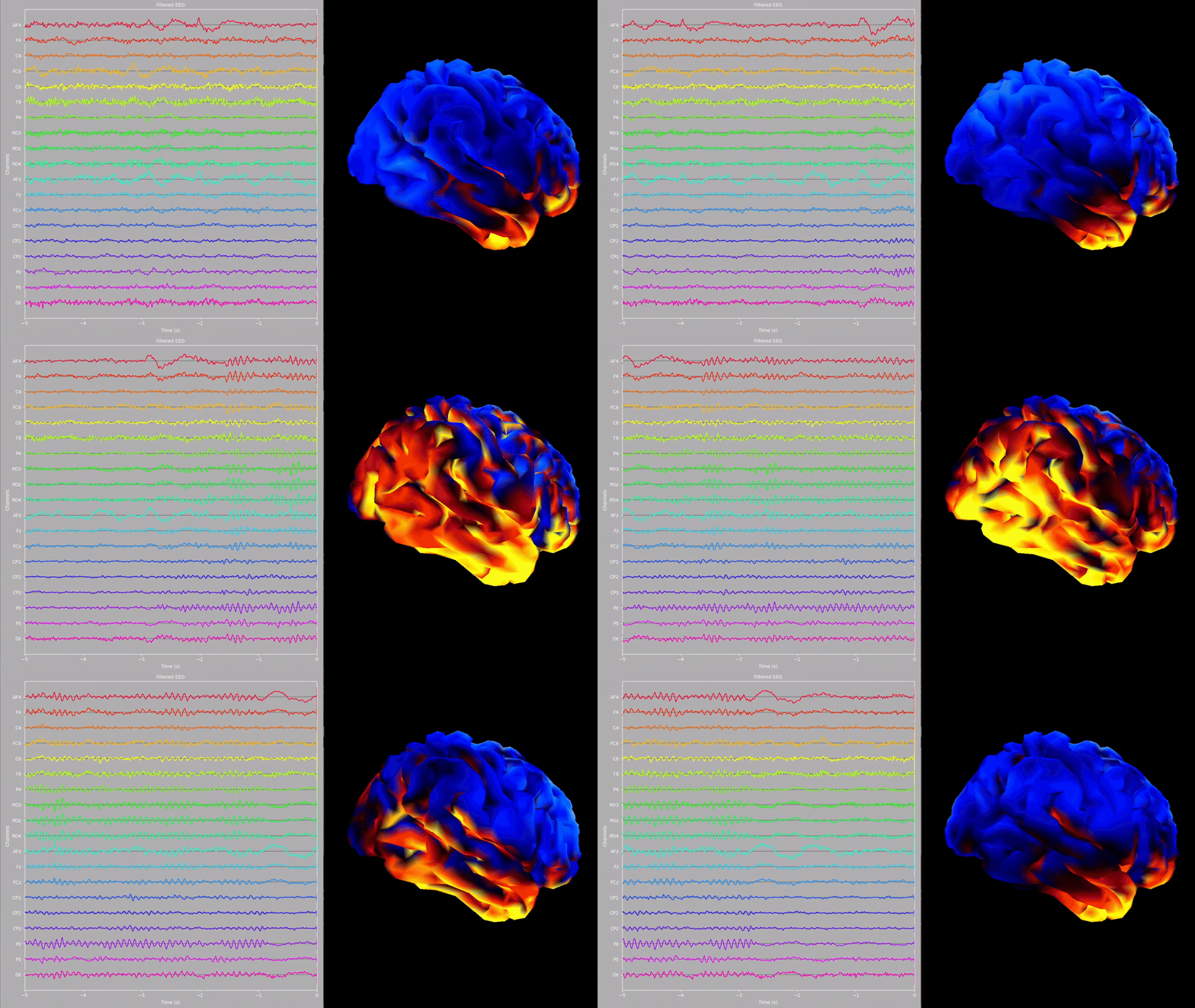
01
The Problem
EEG signals are noisy, sparse, and hard to align with language. The project explored whether learned discrete representations can support a text-generation pipeline.
02
System Architecture
- 01Preprocess raw EEG signals into model-ready temporal features.
- 02Train representation models to compress noisy signal patterns.
- 03Use sequence models to map learned representations toward language tokens.
- 04Serve inference through a lightweight Flask and Next.js application.
03
Highlights
- Compared VQ-VAE plus transformer decoding against an LSTM Seq2Seq baseline.
- Explored attention mechanisms for a signal-to-language task.
- Built a working interface around an experimental research pipeline.
04
Lessons
- Signal preprocessing can dominate downstream model behavior.
- Baselines are essential when the task itself is uncertain.
- Experimental ML projects need careful language around what the system can and cannot infer.
05
What Comes Next
Build stronger evaluation around subject splits, noise robustness, and representation quality before expanding model complexity.